













Keywords
Ethical concerns
Human element in mediation
Online dispute resolution
Mediation Act, 2023
Access to justice
How to Cite




Abstract
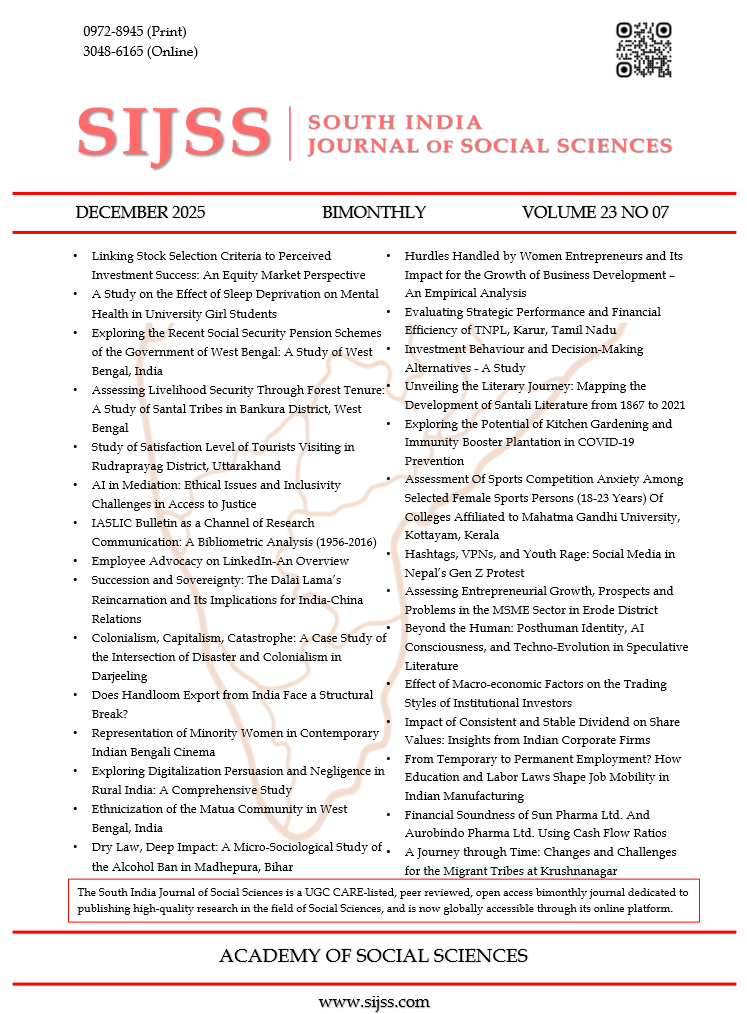
Artificial Intelligence (AI) in mediation holds transformative potential to enhance the efficiency of the dispute resolution processes, however, it brings complex ethical concerns and inclusivity problems that could undermine fair and equal access to justice. This article investigates how AI’s algorithmic biases and diminished human empathy counteract principles of fairness and trust essential to mediation. In this context, it examines the digital divide that has adversely impacted the vulnerable groups, particularly within the diverse socio-legal settings like India. The analysis of India’s new Mediation Act, 2023, indicates legislative deficiencies in addressing the ethical concerns connected with AI’s application in mediation processes. It argues that AI should support, not supplant, human mediators, so that the essence of mediation is not compromised. It proposes a strong ethical framework and bias audits in connection with the application of AI in mediation, in keeping with the goals of inclusive justice (UN SDG 16).
References
1. Abbott, R., & Elliott, B.S. (2023). Putting the artificial intelligence in alternative dispute resolution: How AI rules will become ADR rules. Amicus Curiae, Series 2, Vol. 4, No. 3, 685-706. Retrieved from https://www.jamsadr.com/files/uploads/documents/articles/abbott-ryan-amicuscuriae-putting-the-artificial-07-2023.pdf.
2. Aggestam, K., & Hedling, E. (2024). Digital disruption and rethinking the ‘script’ of peace mediation. The Hague Journal of Diplomacy, 19, 84-114.
3. Ashley, K.D. (2017). Artificial intelligence and legal analytics: New tools for law practice in the digital age. Cambridge Univ. Press.
4. Beioley, K. (2019, August 14). Robots and AI threaten to mediate disputes better than lawyers. Financial Times. Retrieved from https://www.ft.com/content/187525d2-9e6e-11e9-9c06-a4640c9feebb.
5. Bergman, R., (2024, March 21). AI regulations for mediators and arbitrators. Mediate.com. Retrieved December 31, 2024 from https://mediate.com/ai-regulations-mediators-and-arbitrators/.
6. Buolamwini, J., (2023). Unmasking AI: My mission to protect what is human in a world of machines. Penguin Random House 2023.
7. Buyl, M., et al. (2024). Large language models reflect the ideology of their creators. arXiv, hosted by Cornell University. Retrieved December 30, 2024 from https://arxiv.org/pdf/2410.18417.
8. Christian, G. (2024, December 10). Racial bias in AI should be the immediate concern. Policy Options. Retrieved from https://policyoptions.irpp.org/magazines/december-2024/ai-racial-bias/.
9. Deakin, S., & Mark, C. (Eds.). (2020). Is law computable? Critical Perspectives on law and artificial intelligence. Hart Publishing.
10. DiMatteo, L.A. (2022). Artificial intelligence: The promise of disruption. In L.A. DiMatteo et al (Eds.), The Cambridge handbook of artificial intelligence: Global perspectives on law and ethics (p.11). Cambridge University Press.
11. Eurpoean Union. (2024). EU Artificial Intelligence Act – Regulation (EU) 2024/1689. https://eur-lex.europa.eu/legal-content/EN/TXT/PDF/?uri=OJ:L_202401689.
12. Government of India, Ministry of Law and Justice. (2023). The Mediation Act, 2023. Retrieved from https://legalaffairs.gov.in/sites/default/files/MediationAct2023.pdf.
13. Huxley, A. (1932). Brave New World (1st ed.). Chattu & Windus.
14. International Bar Association, Mediation Committee. (2024). Draft guidelines on the use of artificial intelligence in mediation, version 14 September 2024. Retrieved December 29, 2024, from https://img1.wsimg.com/blobby/go/28f9546d-3424-4752-9ee0-42e7335eef8b/MC%20DRAFT%20AI%20in%20Mediation%20Guidelines.pdf.
15. Katsh, E., & Rabinovich-Einy, O. (2017). Digital justice: Technology and the internet of disputes. Oxford Univ. Press.
16. Kinhal, D., et. al. (2020). The future of dispute resolution in India. Vidhi Centre for Legal Policy. Retrieved November 30, 2024 https://vidhilegalpolicy.in/wp-content/uploads/2020/07/200727_The-future-of-dispute-resolution-in-India_Final-Version.pdf (last visited Nov. 30, 2024).
17. Li, F.-F. (2023). Worlds I see. Penguin Random House.
18. Lodder, A.R. & Zeleznikow, J. (2021). Artificial intelligence and online dispute resolution. In A.R. Lodder (Ed.), Handbook of digital dispute resolution (p. 202). Elgar Publishing.
19. Malik, S. (2022, June 22). Changing forms of economic discrimination: Are Indian courts ready for challenge of algorithmic bias? NewsClick. Retrieved December 30, 2024 from https://www.newsclick.in/Changing-Forms-Gender-Based-Economic-Discrimination-Indian-Courts-Ready-Challenges-Algorithmic-Bias.
20. Manyika, J., Silber, J., & Preston, B. (2019, October 25). What do we do about the biases in AI? Harvard Business Review. Retrieved from https://hbr.org/2019/10/what-do-we-do-about-the-biases-in-ai.
21. Markou, C., & Deakin, S.F. (2019). Ex machine lex: Exploring the limits of legal computability. In S. Deakin & C. Markou (Eds.), Is law computable? Critical perspectives on law and artificial intelligence. Hart Publishing. Retrieved from https://dx.doi.org/10.2139/ssrn.3407856.
22. Mediation Act, 2023, No. 42, Act of Parliament, India.
23. National Fair Housing Alliance. (2021, September 4). AI has exacerbated racial bias in housing. Could it help eliminate it instead? MIT Technology Review. Retrieved from https://nationalfairhousing.org/ai-has-exacerbated-racial-bias-in-housing-could-it-help-eliminate-it-instead/.
24. National Judicial Data Grid. (2024). Pending cases in India. Retrieved November 30, 2024 from https://njdg.ecourts.gov.in/njdg_v3//?p=home&app_token=e0b3f2ff5b0d8537cd09e41ee5478bc1d9c9a084cfac896ec591d25dfd4fbca2.
25. NITI Aayog, Government of India. (2021). Designing the future of dispute resolution: The ODR policy plan for India. Retrieved from https://www.niti.gov.in/sites/default/files/2023-03/Designing-The-Future-of-Dispute-Resolution-The-ODR-Policy-Plan-for-India.pdf.
26. Nobel, O. (2022). The equality machine: Harnessing digital technology for a brighter, more inclusive future. Public Affairs.
27. Rabinovich, O., & Katsh, E. (2021). Artificial intelligence and the future of dispute resolution: The age of AI-DR. In M.A. Wahab, D. Rainey, & E. Katsh (Eds.), Online dispute resolution: Theory and practice (pp. 233-254). Eleven International Publishing.
28. Ravanera, C. & Kaplan, S. (2023, October 4). AI bias must move to accountability to address inequity. Policy Options. Retrieved from https://policyoptions.irpp.org/magazines/october-2023/ai-bias-accountability/.
29. Scenario adapted from Connecticut Fair Housing Center v. CoreLogic Rental Property Solutions, LLC, No. 3:2018cv00705. (D. Conn. 2018).
30. Surden, H. (2020). Artificial intelligence and law: An overview. Georgia State University Law Review, 37, 1305.
31. Susskind, R. (2019). Online courts and the future of justice. Oxford University Press.
32. United Nations, SDG 16. Promote Peaceful and Inclusive Societies for Sustainable Development, Provide Access to Justice for All and Build Effective, Accountable and Inclusive Institutions at All Levels. UN Sustainable Development Goals. https://sdgs.un.org/goals/goal16.
33. United Nations. (2024). Governing artificial intelligence for humanity: 2024 report. Retrieved from https://www.un.org/sites/un2.un.org/files/governing_ai_for_humanity_final_report_en.pdf.
34. Vakali, A., & Tantalaki, N. (2024). Rolling in the deep of cognitive and AI biases. arXiv, hosted by Cornell University. Retrieved on December 31, 2024 from https://arxiv.org/html/2407.21202v1.
35. Virmani, A. (2024, July). Viksit Bharat. NITI Aayog Working Paper. Retrieved from https://www.niti.gov.in/sites/default/files/2024-07/WP_Viksit_Bharat_2024-July-19.pdf.
36. Wahab, M.S., Katsh, E., & Rainey, D. (2021). Online dispute resolution: Theory and practice (2nd ed.). Eleven International Publishing 2021.
37. Weisheit, S., & Salger, C. (2023, June 21). Artificial intelligence (AI) in mediation - Chatgpt as mediator 4.0. Mediate.com. Retrieved from https://mediate.com/artificial-intelligence-ai-in-mediation-chatgpt-as-mediator-4-0/.
38. Zeleznikow, J. (2017). Can artificial intelligence and online dispute resolution enhance efficiency and effectiveness in courts. International Journal for Court Administration, 8(2), 35. Retrieved from https://iacajournal.org/articles/223/files/submission/proof/223-1-789-1-10-20170521.pdf.
39. Zeleznikow, J. (2021). Using artificial intelligence to provide intelligent dispute resolution support. Group Decision & Negotiation, 30, 789.

This work is licensed under a Creative Commons Attribution-NonCommercial-NoDerivatives 4.0 International License.
Copyright (c) 2025 South India Journal of Social Sciences